TDR Cable Fault Location Course
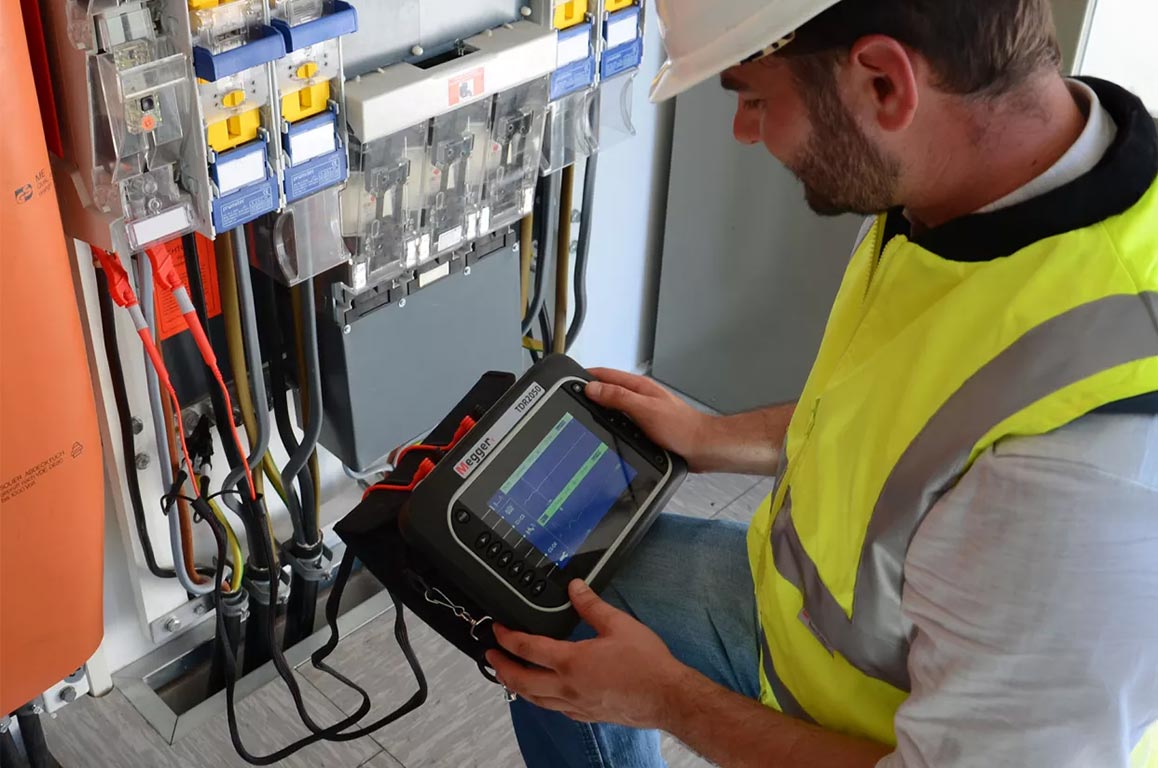
The Time Domain Reflectometry (TDR) Cable Fault Location Course is designed for electrical engineers, technicians, and utility professionals who need to accurately identify and locate faults in underground and overhead cables. This hands-on course focuses on using TDR technology in compliance with industry standards and safety regulations.
Ideal for those working in power distribution, telecommunications, or maintenance sectors, the course provides essential skills to quickly diagnose cable faults, reducing downtime and improving repair efficiency.
Why take the TDR Cable Fault Location Course?
Mastering TDR technology significantly enhances your ability to pinpoint cable faults with precision, saving valuable time and resources on-site. This practical training equips you with both theoretical knowledge and real-world application skills, making you a more effective and confident fault-finding technician.
Our expert-led course offers access to the latest TDR equipment and methodologies, combined with clear instruction and practical exercises. You’ll leave ready to handle a variety of fault scenarios while adhering to health and safety regulations.
Course Overview
This course delivers comprehensive training on fault detection and location using TDR, cable thumping, and bridge measuring techniques.
Course Topics
- Safety in electrical testing at work (INDG354)
- Fundamentals of TDR and its application in cable fault finding
- Hands-on training with TDR testing devices
- Cable thumping and bridge measuring techniques
- Understanding and applying relevant test standards
- Accurate interpretation of TDR test results
- Practical exercises to solidify learning

Electrical engineers, technicians, and utility workers involved in cable maintenance and fault diagnosis.
Common faults include opens, shorts, cable degradation, and insulation failures.
Yes, delegates who complete the course and pass the assessments will be awarded a Certificate of Competence accredited by PASS Ltd. Those who choose not to undertake the exams, or who are unsuccessful in doing so, will receive a Certificate of Attendance.
Absolutely, all training aligns with current industry safety standards.
24 hours (Mon-Fri).