Understanding Appliance Classes & Electrical Safety
When PAT testing, different types of tests are performed depending on the class an appliance falls under.
During manufacture, a portable appliance is given a class rating depending on how the user is protected from electric shock. Any portable appliance without a visible class rating should generally be treated as a Class I appliance.
If an appliance uses mains voltage, it must provide at least two levels of protection to the user. Many appliances include more, but two is the minimum. Having multiple levels of protection helps ensure the appliance remains safe even if one level fails.
Appliance Classes Explained
Electrical appliances are categorised into Class I, Class II, Class III, Class 0, or Class 01. You can read more about each class below.
Class I

The protection in Class I appliances combines basic insulation with a connection to the protective earth conductor (earth wire).
This means the user is protected from electric shock by the insulation of the internal wiring. If this insulation fails and the casing becomes live, the earth connection ensures the casing remains as close to zero potential as possible.
Electricity takes the path of least resistance to earth. If a person touches the casing, their body would provide a higher resistance than the earth conductor, so fault current will flow through the earth wire rather than through the user.
For Class I appliances, remember they provide two levels of protection:
- Basic insulation
- Earth connection
The Class I symbol should be found somewhere on the appliance.
Common examples of Class I appliances include toasters, kettles, washing machines, and irons.
Class II

Class II appliances are known as double insulated, as they have at least two layers of insulation. Because of this, an earth connection is not required for safety.
These appliances are often constructed with insulated internal wiring and an additional insulating outer casing, usually made of plastic.
Examples of Class II appliances include hedge trimmers, lawn mowers, and drills.
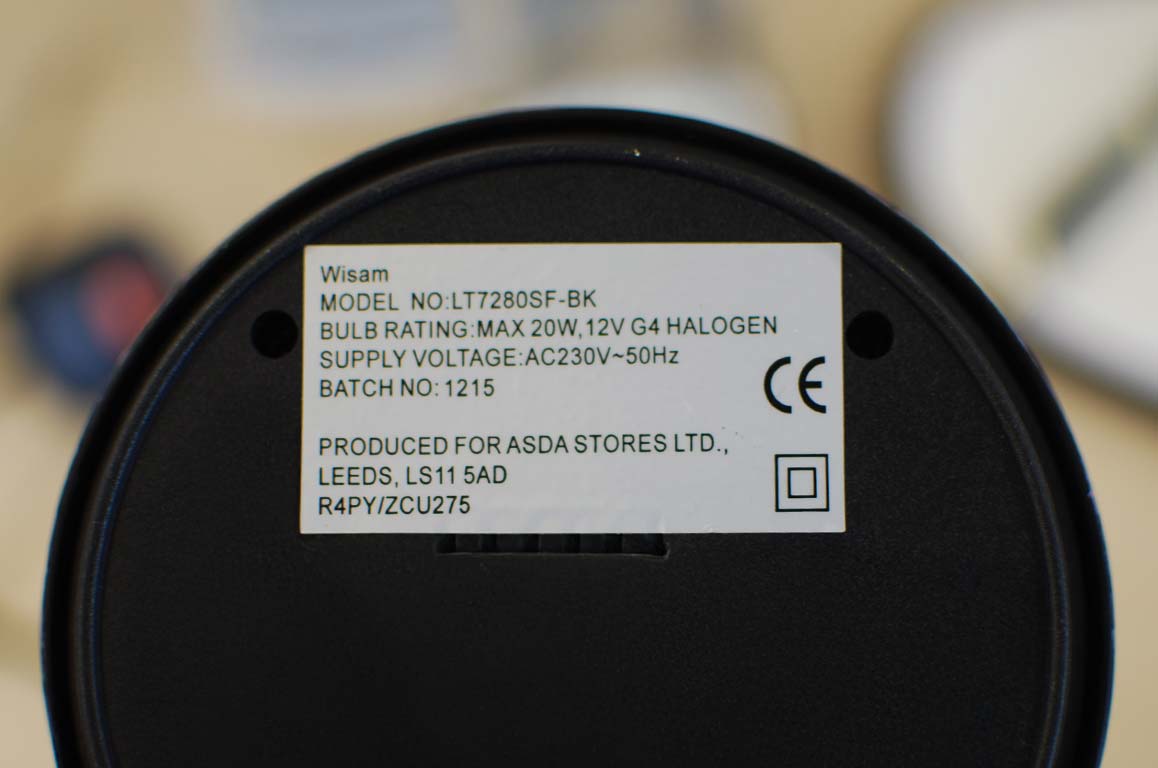
Class II appliances are identified by a square within a square symbol, typically found on the rating plate.
Class III

Class III appliances are designed to be supplied at a safe extra-low voltage (SELV), meaning the risk of electric shock is significantly reduced.
These appliances do not require an earth connection and rely on a low voltage supply, often provided by a transformer or battery.
Examples include some chargers, LED lighting systems, and low-voltage equipment.
Class 0 & Class 01
These types of appliances are now very rare and are generally not found in modern workplaces or homes.
Class 0 appliances rely only on basic insulation and have no provision for an earth connection. If insulation fails, there is no additional protection, making them unsafe by modern standards.
Class 01 appliances have a provision for an earth connection but are typically supplied with a two-core cable or two-pin plug, meaning the earth is not effectively connected.
Both Class 0 and Class 01 appliances have effectively been banned in the UK since 1975 and should not be used.
Identifying an Appliance Class
The easiest way to identify an appliance class is to check the symbol on the rating plate.
In most PAT testing situations, you will mainly encounter Class I and Class II appliances, which can be quickly identified by their symbols.
- If the appliance has a rating plate, check for the double square symbol – this indicates a Class II appliance.
- If there is no double square symbol, treat the appliance as Class I.
- If an appliance has no rating plate, it should be removed from service until it can be properly identified.
Conclusion
Understanding appliance classes is essential for carrying out correct PAT testing and ensuring electrical safety. Each class is designed with different protective measures, and recognising these differences allows you to apply the correct tests and procedures.