Why Do You Need to Keep PAT Testing Records?
Before carrying out any PAT testing, it is essential to have a clear system in place for recording results.
The IET Code of Practice for In-Service Inspection and Testing of Electrical Equipment recommends that records of inspection and test results are kept, along with suitable labelling of appliances that have been tested.
Good record keeping helps demonstrate compliance, track equipment condition over time, and ensure that unsafe items are identified and removed from service.
Equipment Test Record
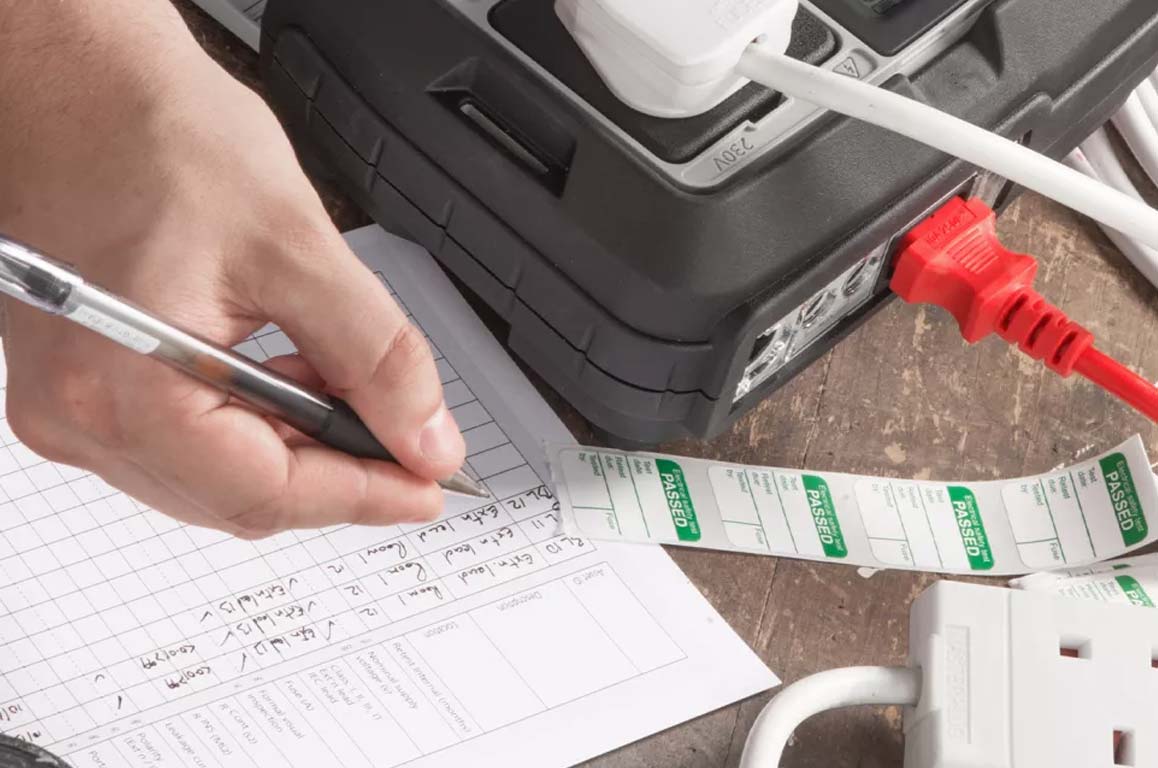
A PAT testing record (often in the form of a log book or software system) is used to document all inspection and test results for each appliance.
This should include details such as the appliance ID, location, test date, and results of both visual inspection and electrical tests.
All records should be completed by a competent person at the time of testing to ensure accuracy and traceability.
Labels
Labels are used to clearly show whether an appliance has passed or failed testing.
They provide a quick visual indication to users that an item has been inspected and help prevent unsafe equipment from remaining in use.
Typical labels include the test date and the recommended next test date, allowing organisations to manage ongoing compliance and scheduling.
Some systems also use barcode labels to link appliances to stored test records, allowing quick retrieval of historical data.
Memory Storage & Software
Many PAT testers include internal memory for storing test results, which can then be downloaded to a computer using dedicated software.
This allows for more efficient record keeping, easier reporting, and improved traceability compared to manual systems.
Digital record systems are now widely used as they reduce paperwork and help maintain accurate long-term testing histories for each appliance.
Where to Buy
You can purchase PAT testing equipment at www.tester.co.uk.