PAT Testing Legal Requirements Explained
What are the legal requirements for PAT testing? It’s a common question, and one that often causes confusion.
The key thing to understand is this: PAT testing itself is not a legal requirement. However, there is a legal requirement to ensure that electrical equipment is safe. PAT testing is simply one of the most widely accepted ways of demonstrating that you are meeting those responsibilities.
In other words, the law requires you to maintain electrical equipment in a safe condition — and PAT testing helps you prove that you are doing so.
Modern guidance recommends a risk-based approach, meaning there are no fixed testing intervals. The frequency of inspection and testing should be determined by factors such as the type of equipment, the environment it is used in, and how often it is used.
The Legislation Behind PAT Testing
The following legislation governs electrical safety in the workplace and forms the legal basis behind PAT testing.
The Health & Safety at Work Act 1974
Under this act, employers and employees have a duty to ensure the health and safety of themselves and others affected by their work activities. This also applies to self-employed individuals.
The Management of Health & Safety at Work Regulations 1999
These regulations require employers to carry out suitable and sufficient risk assessments.
“Every employer shall make a suitable and sufficient assessment of:
(a) the risks to the health and safety of his employees to which they are exposed whilst at work, and
(b) the risks to the health and safety of persons not in his employment arising out of or in connection with the conduct by him of his undertaking.”
This means employers must assess risks and take appropriate steps to reduce them — including risks from electrical equipment.
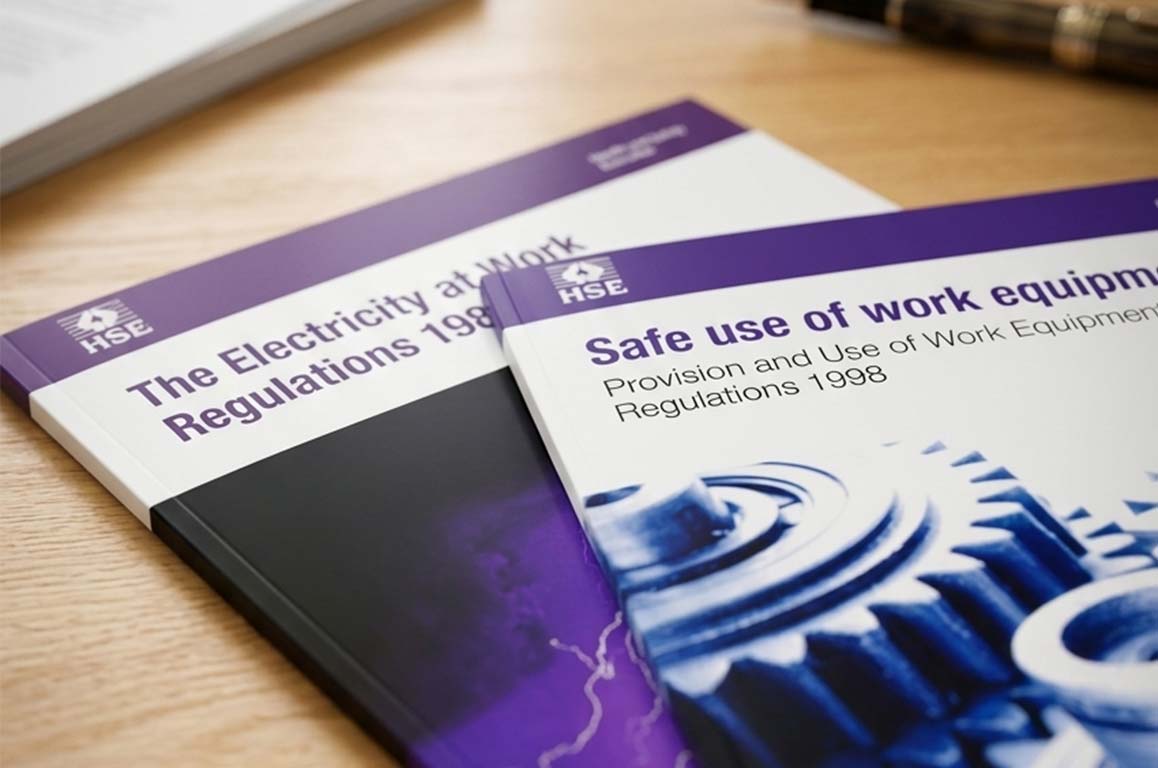
The Provision and Use of Work Equipment Regulations 1998 (PUWER)
These regulations require that all work equipment is maintained in a safe condition.
“Every employer shall ensure that work equipment is maintained in an efficient state, in efficient working order and in good repair.”
This applies to portable, movable, and transportable electrical equipment. Fixed installations are generally covered under separate regulations.
The Electricity at Work Regulations 1989
This is the key legislation covering electrical safety.
“All systems shall at all times be of such construction as to prevent, so far as is reasonably practicable, danger.”
“As may be necessary to prevent danger, all systems shall be maintained so as to prevent, so far as is reasonably practicable, such danger.”
These regulations apply to all electrical systems and equipment used in the workplace.
So Where Does That Leave You?
While PAT testing is not specifically required by law, maintaining electrical equipment in a safe condition is.
PAT testing follows guidance set out in the IET Code of Practice for In-Service Inspection and Testing of Electrical Equipment, which is widely recognised as best practice.
By carrying out PAT testing as part of a structured maintenance system, organisations can demonstrate that equipment has been inspected, tested, and is safe for continued use.
Who Can Carry Out PAT Testing?
The law does not require a specific qualification, but it does require that testing is carried out by a competent person.
This means someone who has:
- A good understanding of electrical systems
- Knowledge of the equipment being tested
- Awareness of electrical hazards
- The ability to identify defects and assess risk
Many organisations choose to use external PAT testing companies, but it is also common for employees to be trained to carry out testing in-house.
What Do You Need to Do to Comply?
PAT testing forms part of a wider process known as In-Service Inspection and Testing.
To meet your legal responsibilities, you should implement a system that includes:
User checks – Regular checks carried out by the person using the equipment to identify obvious signs of damage.
Formal visual inspections – More detailed inspections of the plug, cable, and appliance, usually carried out by a competent person.
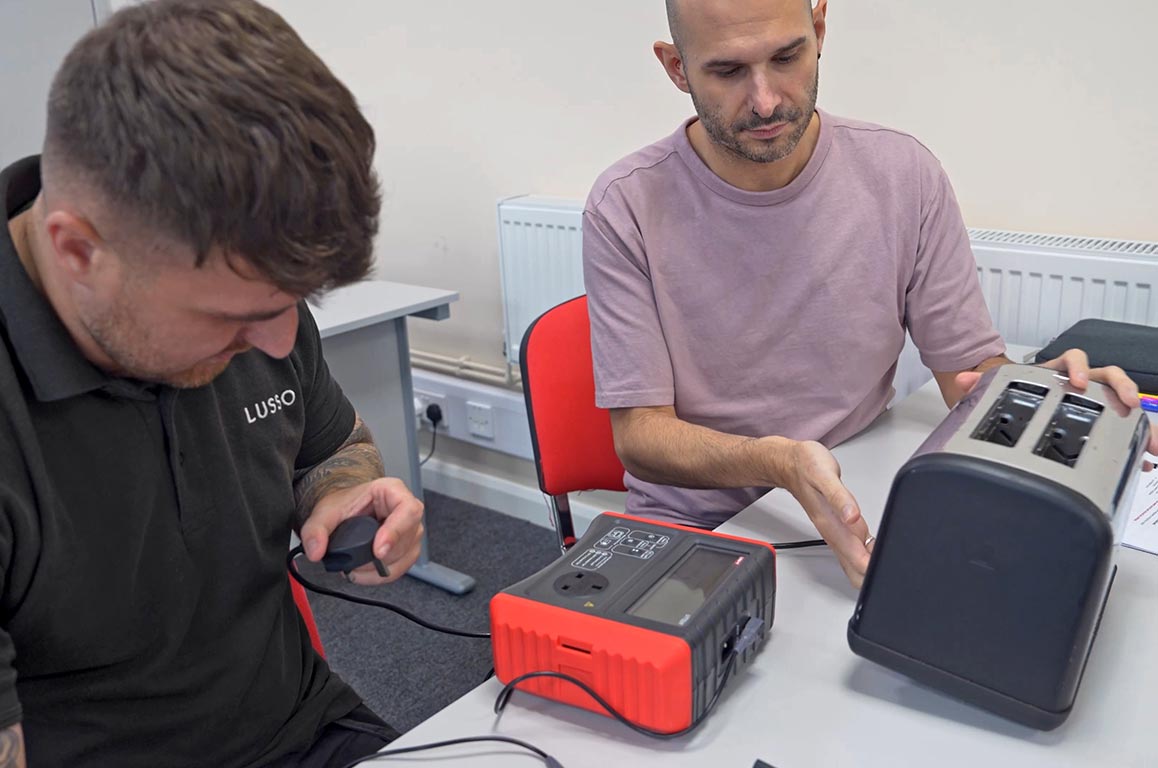
Combined inspection and testing – A full inspection including electrical testing using a PAT tester.
Together, these steps form a risk-based approach to electrical safety, as recommended by current guidance.
PAT Training Courses



Conclusion
PAT testing is not a legal requirement in itself, but maintaining electrical equipment in a safe condition is.
By implementing a risk-based inspection and testing regime, organisations can meet their legal duties and help ensure a safe working environment for everyone.