Understanding Modern Safety Practices
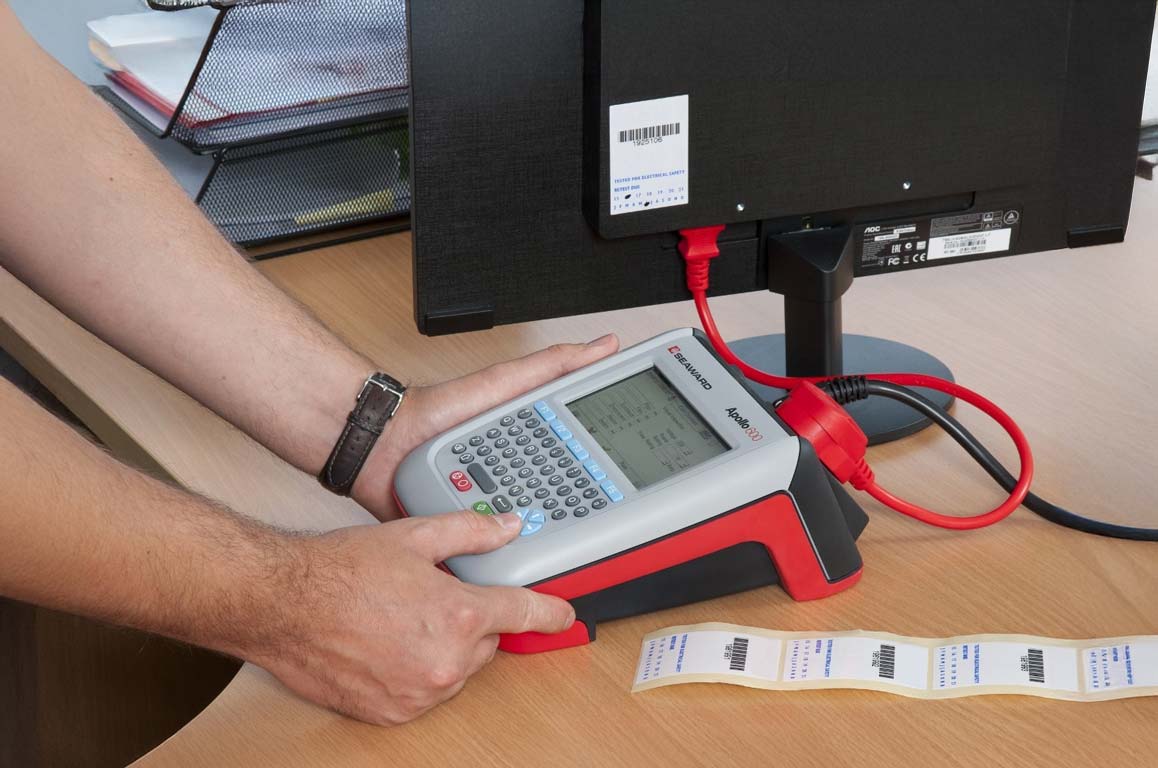
The term “PAT testing” (Portable Appliance Testing) is still widely used in industry, but the correct technical term used in the IET Code of Practice (5th Edition) is In-Service Inspection and Testing of Electrical Equipment.
This reflects an important change in modern electrical safety: the process is no longer limited to “portable appliances” and instead applies to all electrical equipment in use, including fixed, IT, and stationary equipment.
Although older training materials used strict appliance categories and fixed testing intervals, the current approach is based on risk assessment and competent judgement.
Has “PAT Testing” Been Replaced?
No — PAT testing has not been removed or replaced.
The IET Code of Practice does not formally use the term “PAT testing”, but it remains widely used in industry, training, and everyday communication.
What has changed is not the name, but the scope and approach:
- The process now includes all in-service electrical equipment
- Testing intervals are no longer fixed
- Risk assessment determines inspection and testing frequency
What About “EET”?
The term “EET” (Electrical Equipment Testing) is sometimes used informally in industry, but it is important to be clear:
EET is not an official term used by the IET Code of Practice.
The correct and official terminology remains:
In-Service Inspection and Testing of Electrical Equipment
Any references to “EET” should be understood as informal or commercial language, not part of formal IET guidance or British Standards.
Why Equipment Types Still Matter
Although strict categories are no longer used to determine fixed testing intervals, understanding equipment type is still important for risk assessment.
The way equipment is used directly affects its likelihood of damage and therefore its inspection requirements.
Common Equipment Types
The following categories are still widely used in training and practice to help assess risk. They are not regulatory classifications.
Hand-Held Equipment
Hand-held equipment such as drills, grinders, and hairdryers presents a higher level of risk due to frequent handling and movement during use. These appliances are often subject to mechanical stress, increasing the likelihood of damage to cables, plugs, and enclosures.
Many hand-held appliances are Class II (double insulated), although some industrial tools may be Class I. In-service inspection typically includes visual checks, insulation resistance testing, and where applicable, earth continuity testing for Class I equipment.
In practical scenarios, damage is often caused by dropping the appliance, stretching the cable, or contact with heat or sharp edges. Because of this, both regular visual inspection and appropriate electrical testing are important to confirm continued safety.
Where electrical testing is carried out, insulation resistance testing is typically performed at up to 500 V DC, unless the equipment contains sensitive electronic components, in which case a reduced test voltage (e.g. 250 V DC) may be used where appropriate.
Portable Equipment
Portable equipment includes items such as kettles, toasters, and small office appliances that can easily be moved while connected to the supply. These are commonly Class I, although Class II designs are also widely used.
These appliances are subject to wear from regular use, plugging and unplugging, and movement around the workplace. Typical inspection includes visual checks, earth continuity testing for Class I equipment, and insulation resistance testing.
In everyday use, risks often arise from damaged flexes, loose plug connections, or signs of overheating, particularly in higher load appliances such as kettles.
Movable Equipment
Movable (or transportable) equipment refers to items such as fans, televisions, and larger office equipment that can be moved but are not normally moved while in operation. These appliances are often Class I, though Class II equipment is also common.
The risk associated with this category comes from occasional movement, which can lead to trapped or strained cables and damage to plugs or connections.
Inspection and testing generally follow standard procedures for the appliance class, with visual inspection playing a key role in identifying damage that may occur during relocation.
Stationary Equipment
Stationary equipment includes appliances such as fridges, washing machines, and vending machines that remain in one place for long periods. These are typically Class I appliances.
Although considered lower risk due to limited movement, hazards can still arise from long-term wear, environmental conditions, or accidental damage to the supply cable.
Inspection and testing should include visual checks, earth continuity testing, and insulation resistance testing as appropriate. Even in low-risk environments, these appliances should not be overlooked.
IT Equipment
IT equipment includes computers, monitors, printers, and similar devices. These are typically low risk in stable office environments but are often interconnected and reliant on power supplies and detachable leads.
Many IT devices are Class I, while some smaller peripherals and external power supplies may be Class II. In some cases, equipment operates at low voltage via a transformer, meaning the primary concern is the power supply rather than the device itself.
Inspection focuses heavily on cables, connectors, and signs of damage. Electrical testing may include earth continuity and insulation resistance, although care should be taken with sensitive electronic equipment, where lower test voltages may be appropriate.
In some cases, lower test voltages (such as 250 V DC for insulation resistance testing) may be used to avoid damage to sensitive electronic components, depending on equipment design and manufacturer guidance.
Extension Leads & Accessories
Extension leads, IEC leads, and cable reels are among the most frequently damaged items in any environment. They are typically Class I and are subject to significant mechanical stress through handling, coiling, and routing through buildings.
Damage often occurs from trapped cables, repeated flexing, or misuse. Cable reels present an additional hazard when used at high load while coiled, as heat can build up and create a fire risk.
Inspection and testing should include thorough visual checks, earth continuity testing, and consideration of cable length when interpreting resistance values. These items are commonly inspected more frequently due to their higher likelihood of damage.
Heating Appliances
Heating appliances such as fan heaters, convector heaters, and kettles present an increased level of risk due to the combination of high current draw and the generation of heat during normal operation.
These appliances are commonly Class I, although some smaller or double-insulated units may be Class II. Inspection and testing typically include visual checks, earth continuity testing for Class I equipment, and insulation resistance testing.
In practical use, faults often present as signs of overheating, such as discolouration of plugs or sockets, damage to cables, or deterioration of components. These appliances are also frequently used with extension leads, increasing the risk if not used correctly.
Due to the loads involved, particular care should be taken to ensure that connections are sound and that cables and accessories are suitable for the intended use.
Fixed Equipment
Fixed equipment refers to appliances that are permanently installed, such as hand dryers, boilers, and built-in systems. These are not typically included in portable appliance testing programmes but still fall under the scope of in-service inspection and maintenance.
These appliances are usually Class I and may be connected via a fused connection unit or isolator. While formal PAT-style testing may not always be appropriate, visual inspection and verification of earthing and supply integrity remain important.
Responsibility for these items may fall under wider maintenance regimes, but they should not be overlooked as part of overall electrical safety management.
Risk-Based Inspection
The IET Code of Practice (5th Edition) places emphasis on a risk-based approach rather than fixed schedules or rigid categories.
Duty holders are expected to determine appropriate inspection and testing intervals based on:
- Type of equipment
- Environment of use
- Frequency of use
- Likelihood of damage
- Previous inspection history
- Competence of users
Example Risk-Based Guidance Table
This table is for guidance only and is not an official IET table. It illustrates how risk may influence inspection planning.
| Equipment Type | Typical Environment | Risk Level | Typical Approach |
|---|---|---|---|
| Power tools | Construction site | High | Frequent inspection and testing |
| Portable appliances | Office / commercial | Medium | Routine visual inspection and periodic testing |
| IT equipment | Office environment | Low | Primarily visual inspection with occasional testing |
| Stationary appliances | Fixed installation areas | Low | Periodic inspection |
| Extension leads | Any environment | Medium–High | Frequent inspection due to high damage risk |
Testing Frequency
While modern guidance from the IET Code of Practice (5th Edition) does not prescribe fixed inspection or testing intervals, in practice many organisations still adopt a routine annual approach for general workplace equipment.
This is not a legal requirement, but it remains common because it provides a simple, easy-to-manage system for maintaining records and demonstrating due diligence.
In reality, the appropriate frequency should always be based on a risk assessment, taking into account:
- The type of equipment
- The environment in which it is used
- The level of user competence
- The likelihood of damage or misuse
- Previous inspection history
Higher-risk environments (such as construction sites or workshops) typically require more frequent checks, while lower-risk environments (such as offices) may justify longer intervals between formal inspections.
Ultimately, frequency is a matter of justified control rather than fixed rules, with annual testing remaining a widely adopted benchmark rather than a regulatory requirement.
PAT Training Courses


Conclusion
Modern in-service inspection and testing is no longer defined by rigid categories or fixed schedules. Instead, it is based on a practical, risk-led approach that focuses on maintaining electrical safety in real working environments.
While the term “PAT testing” is still widely used, the current framework is better described as In-Service Inspection and Testing of Electrical Equipment, reflecting its broader scope across all types of workplace electrical equipment.
In practice, effective electrical safety management relies on combining regular user awareness, appropriate visual inspection, and proportionate testing carried out by a competent person. When supported by good record keeping and sensible risk assessment, this approach provides a reliable and compliant method of maintaining electrical safety in the workplace.