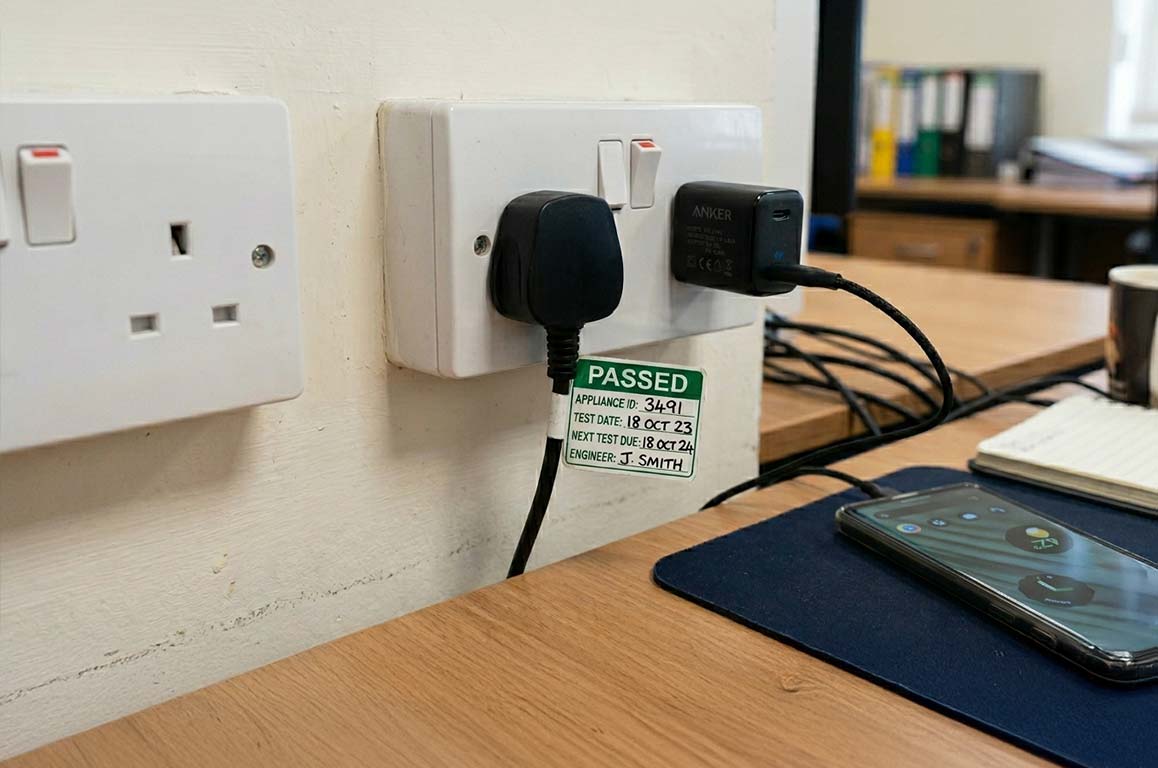
Personal Electrical Appliances in the Workplace
Appliances owned by employees, students, or visitors can present additional risks when brought into an organisation.
Unlike company-owned equipment, the condition, history, and maintenance of these items are often unknown. For this reason, it is good practice to check any personal appliance before allowing it to be used on site.
Duty of Care & Responsibilities
Under the Electricity at Work Regulations 1989, organisations have a duty to ensure that electrical equipment is maintained so as to prevent danger.
This responsibility applies to all equipment used within the workplace, regardless of ownership. As such, any appliance brought onto site should be considered within your overall electrical safety procedures.
Managing Personal Appliances
To reduce risk, many organisations implement a policy for staff-, student-, or visitor-owned equipment. This may include restricting certain types of appliances or requiring checks before use.
Good practice may include:
- Carrying out a visual inspection before the appliance is used
- Including the appliance within your inspection and testing programme where appropriate
- Recording the appliance as part of an equipment register
In higher-risk environments, such as accommodation blocks or workshops, stricter controls may be necessary.
Is PAT Testing Required?
PAT testing is not a legal requirement, but it is a widely accepted method of demonstrating that electrical equipment has been inspected and maintained.
Whether testing is required should be based on a risk assessment. In many cases, a visual inspection may be sufficient, while in others—particularly where equipment is higher risk or used frequently—formal testing may be appropriate.
By inspecting and, where necessary, testing personal appliances, organisations can ensure they are accounted for and managed alongside other equipment.
Raising Awareness
Anyone bringing an appliance into the workplace should be made aware of the potential risks associated with damaged or unsuitable equipment.
Providing simple guidance on safe use and encouraging the reporting of faults helps to prevent unsafe appliances from being used.
Conclusion
Personal appliances can introduce additional risk if not properly controlled.
By applying a risk-based approach, carrying out appropriate checks, and implementing a clear policy, organisations can safely manage staff- and student-owned equipment while meeting their responsibilities for electrical safety.