What Is a Formal Visual Inspection?
A formal visual inspection is a structured, recorded check of an appliance, including its plug and flexible cable. It forms a key part of any PAT testing and electrical maintenance regime.
According to the Health and Safety Executive (HSE):
“Most electrical safety defects can be found by visual examination but some types of defect can only be found by testing. However, it is essential to understand that visual examination is an essential part of the process because some types of electrical safety defect can’t be detected by testing alone.”
Unlike informal user checks, which are typically quick visual reviews carried out by equipment users, a formal inspection is systematic and must be documented.
It is always carried out before electrical testing begins and is often where the majority of faults are identified.
Competence & Responsibility
A formal visual inspection must be carried out by a competent person.
The 5th Edition of the IET Code of Practice defines competence as:
“A person possessing sufficient technical knowledge or experience to be capable of ensuring that risk is prevented.”
This doesn’t necessarily mean a qualified electrician, but it must be someone with the training and knowledge to recognise hazards, understand acceptable conditions, and know when equipment should be removed from service.
Why It Matters
While PAT testing includes electrical testing to confirm equipment safety, many faults can be identified before any testing takes place.
The key purposes of a formal visual inspection are:
- Catch early signs of damage: Cracks, corrosion, overheating, and loose components are often visible before electrical faults develop.
- Prevent unsafe equipment use: Equipment that fails a visual inspection should not be used or tested further.
- Protect users and premises: Visual defects can indicate more serious underlying issues.
- Support compliance: The HSE recommends formal inspection as part of a structured electrical safety regime.
This makes the formal visual inspection a critical first filter. If equipment fails at this stage, it should not proceed to electrical testing and must be taken out of service.
Inspection Frequency
There is no fixed interval for formal visual inspections. The frequency depends on the type of equipment, how often it is used, who is using it, and the environment it is used in.
For example:
- Office equipment – in a clean, low-risk environment may only require infrequent inspection
- Portable tools – used on construction sites may require far more frequent checks, potentially before each use
The IET Code of Practice provides guidance on suggested intervals, but inspection frequency should always be based on risk assessment and ongoing review.
Steps to Carrying Out a Visual Inspection
To make things easier, we’ll walk you through each part of the formal visual inspection in a simple step-by-step guide.
Plugs
Plugs are just as important as the appliance itself. If a plug is faulty, it can pose a risk of electric shock, cause fires, and should never be used once faults are identified.
Look out for:
- Obvious damage – this is the most common source of faults within plugs. Moving furniture or appliances and leaving the plug dangling can cause it to hit walls, damaging or cracking the casing.
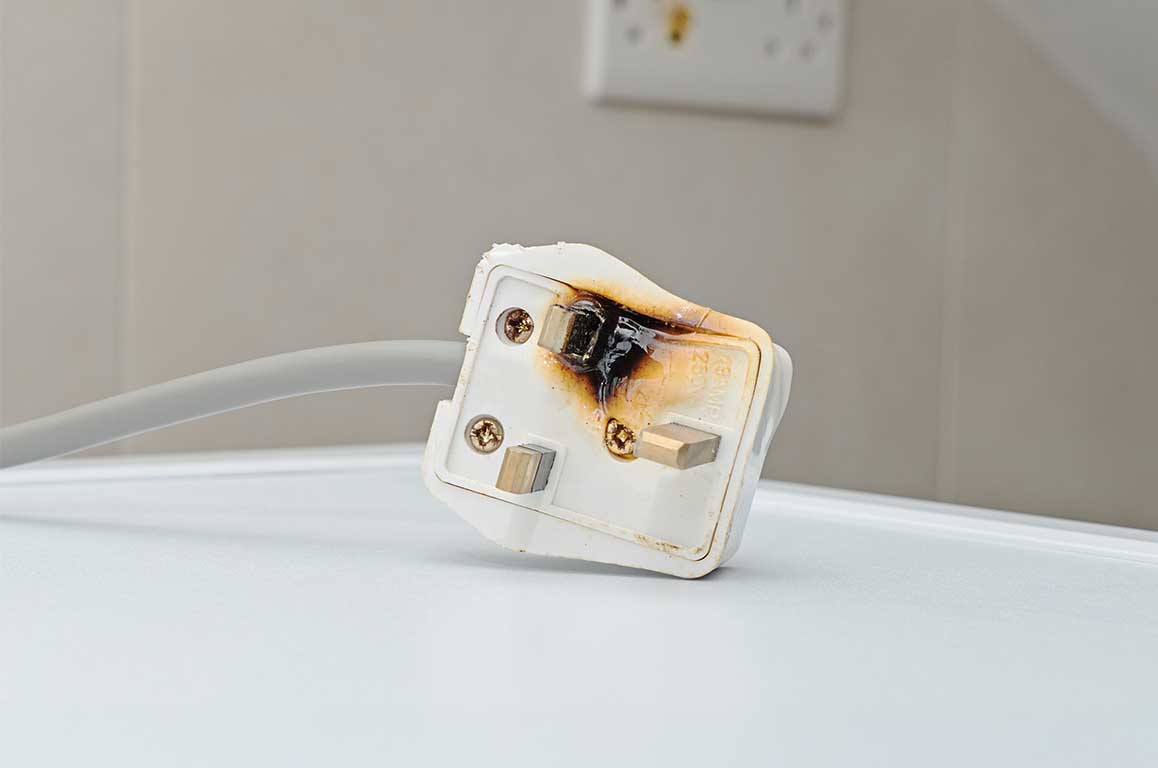
- Signs of burning or heat damage – if present, the plug should be replaced immediately.
- Insulated pins – it is a UK legal requirement for plugs to have insulation on live and neutral pins. Any plug without this must be removed from service immediately.
- Incorrect fuse sizes – replace any plug fuse that is overrated.
- Class I appliances – must have an earth wire fitted. Any Class I appliance with a two-core cable should fail inspection.
- Incorrect wiring – check that live, neutral and earth conductors are connected to the correct terminals.
- Secure terminations – ensure all connections are tight.
- Bent pins – plugs with bent pins should never be used, as they may not fit correctly into sockets and can be dangerous.
If faults are found with the plug, they must be repaired or the plug replaced.
Cables
Before starting, ensure the appliance is switched off and unplugged from the mains.
Visually inspect the entire length of the cable for:
- Cuts, fraying, or wear – all of these should be treated as potential hazards.
- Exposed internal wiring – the cable must fail immediately and be replaced.
- Tape – often conceals damage and should be removed for proper inspection.
After a thorough visual check, also consider the following:
- Ensure the cable is positioned safely – cables in high-traffic or hazardous areas are more likely to become damaged or create trip hazards. Keep cables tidy and secure wherever possible.
- Feel the cable – although it’s called a visual inspection, running your hands along the cable can help identify damage not immediately visible. Always ensure the appliance is unplugged before doing this.
If damage is present, stop using the cable immediately.
Appliances
As part of the inspection, check the appliance for obvious signs of damage.
Look out for:
- Cracks – these can worsen over time and compromise insulation, increasing risk.
- Chemical damage – corrosive substances can severely damage appliances, so look for signs such as burns or discolouration.
- Corrosion – degradation over time can present serious safety risks.
- Ventilation – do not block appliance fans, as this can cause overheating.
- Portable heaters – never place items such as towels on top, as this is a fire risk.
- Lamps – bulbs above 100W should be fitted with the correct shade to reduce fire risk.
- Water exposure – keep appliances away from water at all times.
- Overheating – check for burn marks, ensure proper spacing, and keep ventilation slots clear.
- Casing – ensure the outer casing is secure. Class II appliances rely on this for insulation.
- Rating plate – appliances should have a rating plate to identify electrical details and classification.
- Mains cable connection – gently check for excessive movement, which may indicate internal issues.
- On/off switch – ensure it is not damaged and operates correctly.
Mains Socket Outlet
Although mains sockets are not part of PAT testing, they should still be visually inspected. Full testing is carried out during fixed wiring inspections, which are separate.
Check for the following:
- Cracks – damaged socket casings can lead to electric shock or fire hazards.
- Signs of overheating – such as burn marks or discolouration.
- Shutter mechanism – ensure it operates correctly over live and neutral openings.
- Secure fitting – the socket should be firmly fixed in place.
- Switch function – it should operate correctly and not feel loose or faulty.
- Emergency isolation – ensure there is a way to quickly switch off power if needed.
RCD (Residual Current Device)
RCDs are safety devices that disconnect power when an imbalance is detected between live and neutral currents.
To check an RCD:
- Inspect for visible damage – replace if defects are found.
- Use the test button – pressing it should cut the power, confirming correct operation.
Typical operating current should be 30mA or less (this may require verification by a qualified electrician).
Environment
As part of the visual inspection, assess the surrounding environment for safety risks.
Common safety risks:
- Trailing cables can create both electrical and trip hazards. Keep workspaces tidy and organised.
- Use of appliances in appropriate environments (e.g. do not use indoor appliances outdoors or in wet conditions).
- Avoid enclosing appliances such as microwaves in confined spaces while in use.
- Limit the use of extension leads where possible. Reposition equipment closer to sockets instead.
Logging Results
Every formal visual inspection should be documented as part of your PAT testing process.
Keeping accurate records helps:
- Track and monitor equipment condition over time
- Identify recurring faults or misuse
- Demonstrate compliance during audits or investigations
Conclusion
A formal visual inspection is the first and one of the most important stages of PAT testing. It helps identify faults early, prevents unsafe equipment from being used, and supports compliance with electrical safety requirements.
When carried out correctly and consistently, it forms the foundation of an effective electrical safety programme.