What Are the EICR Qualification Changes?
From 1 October 2026, the requirements for electricians carrying out periodic inspection and testing under an electrotechnical certification or registration scheme are changing.
The updated Electrotechnical Assessment Specification (EAS) introduces clearer competence requirements for individuals undertaking or responsible for periodic inspection and testing, including EICRs.
For electricians, the practical message is simple: check your qualifications, your experience and your CPD now rather than waiting until October.
If you need a recognised inspection and testing qualification, the City & Guilds 2391-52 is a qualification worth considering because it covers both initial and periodic inspection and testing.
Meeting the EICR Requirements
The changes come from the updated Electrotechnical Assessment Specification (EAS).
For periodic inspection and testing, the updated requirements clarify the competence expected of individuals carrying out or responsible for this work.
The main requirements are:
| Requirement | What electricians need to know |
|---|---|
| Level 3 qualification | Hold an acceptable relevant Level 3 qualification for periodic inspection and testing, such as the 2391-51 or 2391-52, or another qualification listed in the EAS Qualifications Guide. |
| Two years’ experience | Be able to show evidence of at least two years’ experience in periodic inspection and testing. |
| Ongoing CPD | Be able to show evidence of ongoing Continuing Professional Development. |
This is particularly important for electricians who have historically relied on practical experience but may not have a recognised inspection and testing qualification.
The changes apply from 1 October 2026.
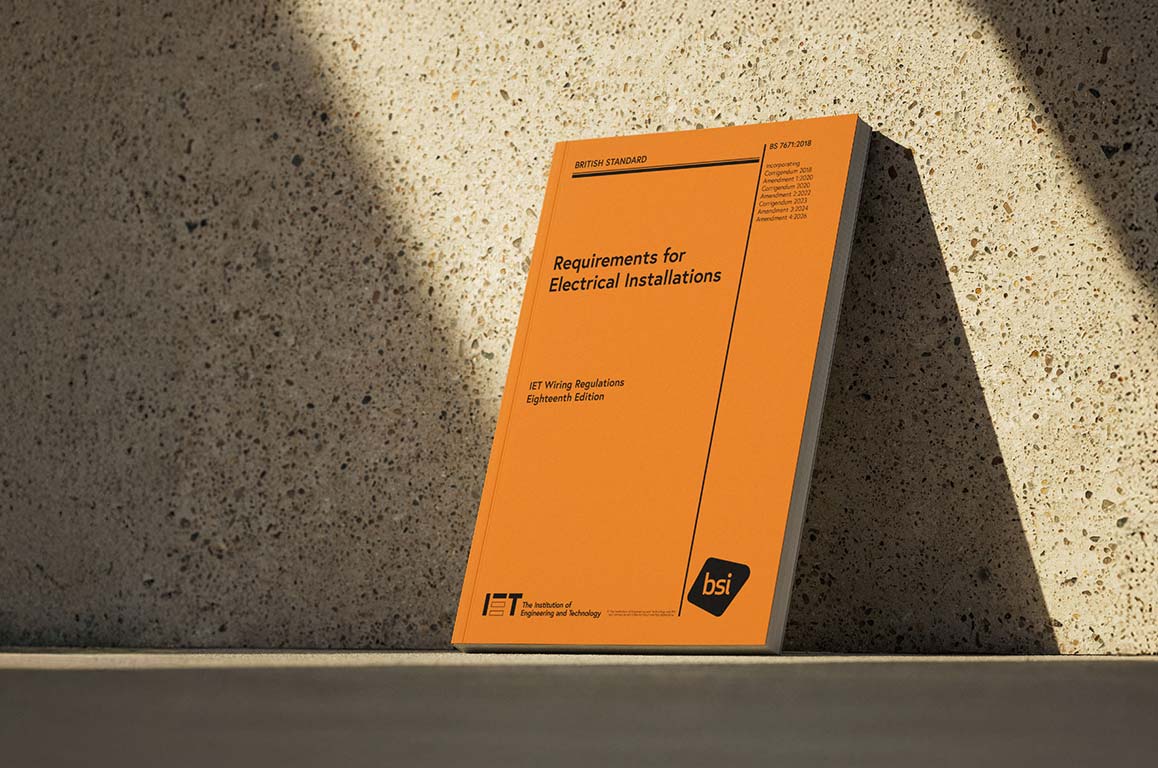
There is also a separate change to BS 7671, with Amendment 4 becoming the current edition when the previous edition is withdrawn on 15 October 2026.
These are two separate changes. The EAS change concerns competence and qualifications, while the BS 7671 change concerns the technical requirements electricians work to.
2391 Qualifications for EICRs
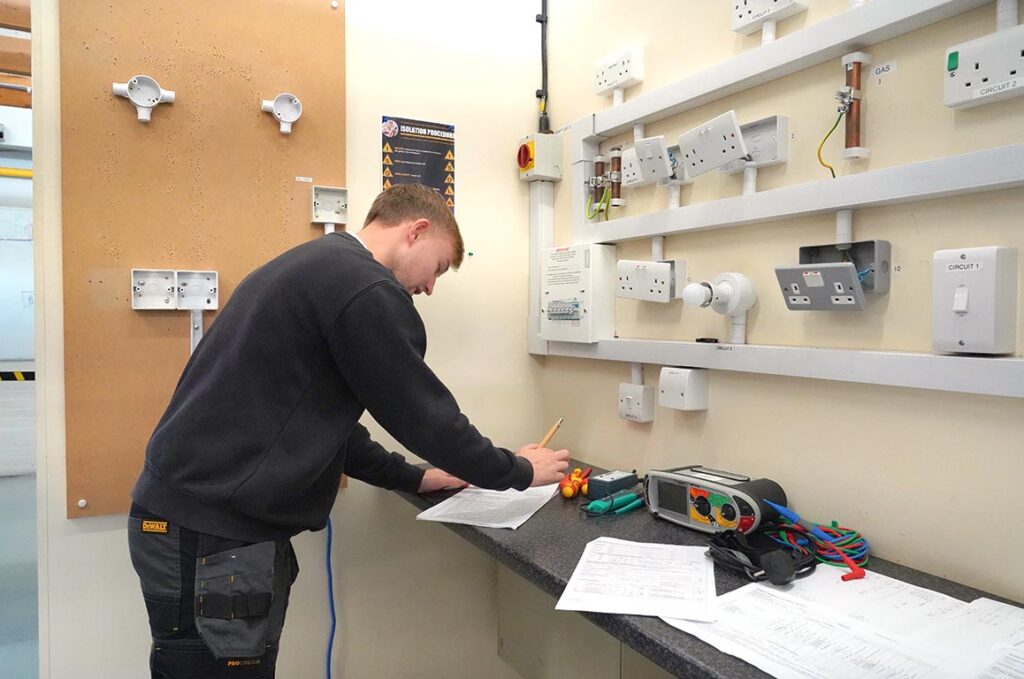
For electricians undertaking or responsible for periodic inspection and testing under the EAS, an acceptable relevant Level 3 qualification is required.
The EAS does not say that every electrician must hold the specific City & Guilds 2391-52. Instead, the requirement is for an acceptable relevant qualification, with the EAS Qualifications Guide setting out the qualifications that can be accepted.
The 2391-51 and 2391-52 are recognised qualifications for inspection and testing.
For electricians who want a qualification covering both initial and periodic inspection and testing, the City & Guilds 2391-52 is therefore a practical option to consider.
Why the 2391-52 Matters
The City & Guilds 2391-52 covers both initial verification and periodic inspection and testing of electrical installations.
This makes it particularly relevant to electricians who want to carry out EICRs while also developing their competence in initial inspection and testing.
The main difference between the commonly discussed qualifications is:
| Qualification | Main focus |
|---|---|
| 2391-51 | Periodic inspection and testing |
| 2391-52 | Initial verification and periodic inspection and testing |
| 2382 / 18th Edition | Knowledge and understanding of BS 7671 |
For electricians looking for a qualification covering both initial and periodic inspection and testing, the 2391-52 provides the wider scope.
If you’re looking to gain the qualification, you can find out more about the 2391-52.
18th Edition and Inspection & Testing
Is 18th Edition Enough for EICRs?
No. 18th Edition and inspection and testing qualifications demonstrate different areas of competence.
The City & Guilds 2382 18th Edition qualification is concerned with understanding the requirements of BS 7671.
Periodic inspection and testing is a separate area of competence. An electrician carrying out an EICR needs to be able to inspect an installation, carry out appropriate tests, understand the results and make appropriate judgements about the condition of the installation.
A simple way to look at the qualifications is:
| Qualification | What it demonstrates |
|---|---|
| 2382 / 18th Edition | Knowledge and understanding of the requirements of BS 7671 |
| 2391-51 | Competence in periodic inspection and testing |
| 2391-52 | Competence in initial verification and periodic inspection and testing |
Having an 18th Edition qualification does not, by itself, demonstrate the specific inspection and testing competence required for periodic inspection and testing.
Level 3 Qualifications for EICRs
The 2026 EAS changes should not be interpreted as meaning that every electrician carrying out EICRs must obtain a specific Level 3 Electrical Installation Diploma.
The relevant EAS requirement is an acceptable relevant Level 3 qualification for those undertaking or responsible for periodic inspection and testing.
The EAS Qualifications Guide sets out the qualifications accepted for the relevant work category. This includes recognised inspection and testing qualifications such as the City & Guilds 2391-51 and 2391-52.
If you’re already an experienced electrician, don’t automatically assume that you need to complete an entire electrical installation training route.
First, check the qualifications you already hold against the current EAS requirements.
If the gap is inspection and testing, a recognised qualification such as the 2391-52 may be the relevant next step.
EICR Experience and Competence
Existing EICR Experience
Relevant experience counts — but experience is not the only requirement.
The updated EAS requirements mean that those undertaking or responsible for periodic inspection and testing need to demonstrate:
- An acceptable relevant Level 3 qualification
- At least two years’ experience in periodic inspection and testing
- Ongoing CPD
So if you’ve been carrying out EICRs for years, that experience remains relevant.
However, years of experience alone should not be assumed to satisfy the updated requirements if you do not also hold an acceptable relevant qualification.
The practical approach is to check your existing qualifications and speak to your certification body if you’re unsure how the requirements apply to you.
Proving Your Experience
If you already carry out periodic inspection and testing, it’s worth making sure you have evidence of your experience.
Useful evidence can include:
- Completed EICRs
- Employer confirmation
- Inspection and testing records
- Qualification certificates
- Training records
- Assessment documentation
- CPD records
Keep your evidence organised rather than trying to reconstruct your experience when you need it.
Self-Employed Electricians and Subcontractors
The requirements aren’t limited to electricians who are directly employed by an electrical contractor.
The EAS definition of employed persons can include directly employed staff, temporary or agency workers, subcontracted labour, self-employed individuals and sole traders engaged by a business to perform electrotechnical work.
If you are self-employed or work as a subcontractor, it’s therefore important to understand how the certification arrangements you work under apply to you.
Don’t assume that another electrician’s qualifications automatically cover your own competence.
If in doubt, speak directly to your certification or registration body.
Qualified Supervisors
The updated EAS requirements are particularly important for businesses with several people carrying out inspection and testing.
The requirement isn’t simply about having one qualified person somewhere within the business.
All employed persons and Qualified Supervisors undertaking and/or responsible for periodic inspection and testing must meet the relevant requirements, including holding an acceptable qualification, demonstrating the required experience and undertaking CPD.
If you run an electrical business, it therefore makes sense to review the qualifications of everyone who carries out EICRs.
A Simple Business Check
Before October 2026, check the following:
| Question | What to check |
|---|---|
| Who carries out our EICRs? | List everyone involved |
| Do they have an acceptable Level 3 qualification? | Check certificates |
| Do they have two years’ relevant experience? | Gather evidence |
| Can that experience be demonstrated? | Keep EICRs and employer records |
| Are they undertaking CPD? | Keep a CPD record |
| Is their BS 7671 knowledge current? | Check qualifications and updates |
| What does our certification body require? | Confirm directly |
Trainees and Apprentices
Trainees and apprentices can undertake periodic inspection and testing under the close supervision of another employed person who meets the mandatory technical competence requirements for periodic inspection and testing.
This allows them to gain relevant experience while working under appropriate supervision.
The updated requirements do not mean that an apprentice or trainee is prevented from gaining inspection and testing experience.
BS 7671 Amendment 4
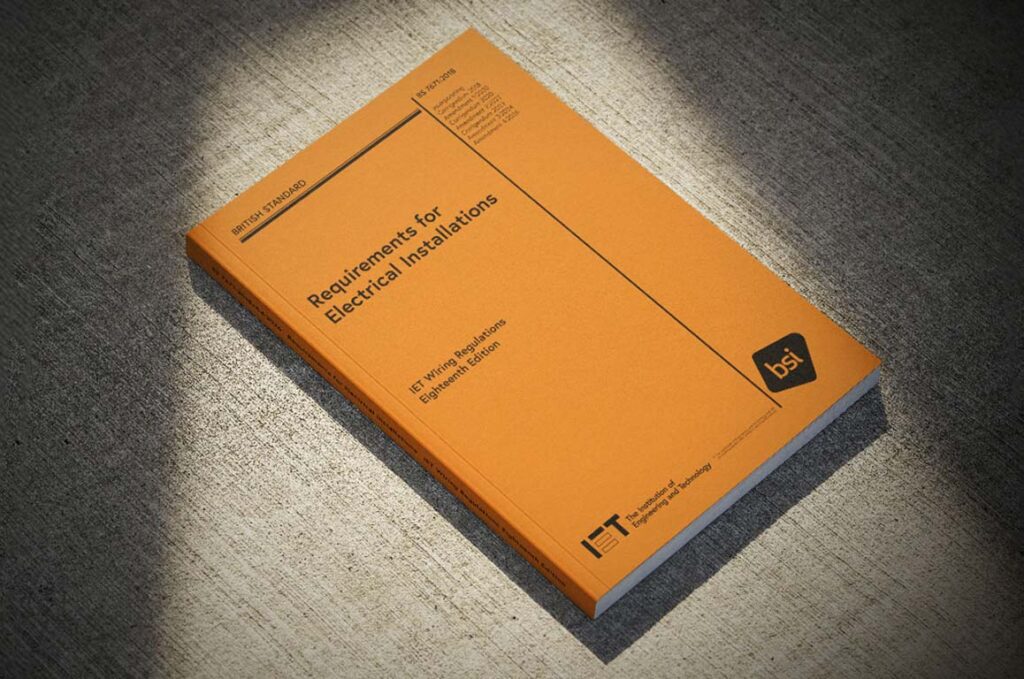
The EAS qualification changes aren’t the only development electricians need to be aware of in 2026.
BS 7671:2018+A4:2026 has also been published.
The previous edition remains in transition until 15 October 2026, when it is withdrawn.
For electricians carrying out EICRs, staying up to date with BS 7671 is particularly important because an EICR involves much more than simply recording test results.
You need to be able to:
- Inspect an electrical installation
- Identify defects and deterioration
- Carry out appropriate tests
- Understand test results
- Assess the installation against the relevant requirements
- Correctly record observations
- Complete the appropriate EICR documentation
The latest amendment also includes changes relevant to inspection and testing and the model forms used for EICRs.
For a more detailed overview of the changes, see the guide to BS 7671 Amendment 4.
Preparing for October 2026
There is no need to panic, but it is worth checking your position before the changes come into effect.
The key things to do are:
- Check your existing qualifications – find your certificates and check whether you already hold an acceptable relevant Level 3 qualification for periodic inspection and testing.
- Check your inspection and testing qualification – if you already hold a recognised qualification, make sure it meets the requirements that apply to your work.
- Consider the 2391-52 if you need a qualification – the City & Guilds 2391-52 covers both initial and periodic inspection and testing.
- Gather evidence of your experience – make sure you can demonstrate your relevant inspection and testing experience, including the required two years where applicable.
- Keep your CPD up to date – maintain a record of relevant training, technical updates and professional development.
- Speak to your certification body – if you’re unsure whether your current qualifications, experience and arrangements meet the requirements, check directly with your certification or registration body.
The important thing is to identify any gaps now rather than waiting until October 2026.
Related Courses
 City & Guilds 2391-52 Combined Initial Verification / Periodic Inspection & Testing of Electrical Installations Course
£1100
£1320
View Course
City & Guilds 2391-52 Combined Initial Verification / Periodic Inspection & Testing of Electrical Installations Course
£1100
£1320
View Course

 City & Guilds 2392-10 Inspection & Testing Course
£830
£996
View Course
City & Guilds 2392-10 Inspection & Testing Course
£830
£996
View Course
 Introduction to Inspection & Testing of Electrical Installations Course
£250
£300
View Course
Introduction to Inspection & Testing of Electrical Installations Course
£250
£300
View Course
 Amendment 4
 City & Guilds 2382-26 18th Edition Wiring Regulations Course
£495
£594
View Course
City & Guilds 2382-26 18th Edition Wiring Regulations Course
£495
£594
View Course
Related Articles

Frequently Asked Questions
It depends on the circumstances and, in particular, whether you are carrying out periodic inspection and testing under an electrotechnical certification or registration scheme.
From 1 October 2026, the EAS requirements mean that individuals undertaking or responsible for periodic inspection and testing under the relevant certification arrangements must hold an acceptable relevant Level 3 qualification, have evidence of at least two years’ experience in periodic inspection and testing and demonstrate ongoing CPD.
2391-51 and 2391-52 are among the recognised qualifications, although the EAS Qualifications Guide also lists other acceptable qualifications.
If you currently carry out EICRs without an appropriate inspection and testing qualification, it is worth checking your position with your certification or registration body before October 2026.
The EAS does not require every electrician to hold the specific City & Guilds 2391 qualification. What matters is whether the qualification you hold is an acceptable relevant qualification listed in the EAS Qualifications Guide.
The guide includes recognised Level 3 inspection and testing qualifications, including the 2391-51 and 2391-52, as well as other qualifications.
If you hold an alternative inspection and testing qualification, don’t assume it is or isn’t accepted based simply on its title. Check the current EAS Qualifications Guide or ask your certification body to confirm.
An older qualification should not automatically be assumed to be invalid simply because it was completed some time ago. The important question is whether the qualification is an acceptable qualification under the relevant EAS requirements.
Your certification body may also need to see evidence that you meet the other requirements, including the relevant experience and ongoing CPD requirements.
If you already hold a 2391 qualification, check the exact qualification and certificate details before booking another course. Your certification body can confirm whether your existing qualification meets the requirements that apply to your work.
This is one of the practical questions raised by the new requirements. The two-year requirement is specifically about experience in periodic inspection and testing.
If you are developing your inspection and testing experience, one route is to undertake this work under the supervision of an appropriately competent person and build a record of the work you have carried out.
The EAS guidance recognises evidence such as written confirmation from existing or previous employers showing that you worked under another competent person who held an acceptable Level 3 inspection and testing qualification.
Start keeping your evidence now. Completed EICRs, employment records and written confirmation of relevant experience can help demonstrate the experience you have gained.
You can gain relevant inspection and testing experience while working towards the experience requirement, but the way that work is undertaken matters.
The EAS specifically allows trainees and apprentices to undertake periodic inspection and testing under the close supervision of another employed person who meets the mandatory technical competence requirements.
For other electricians, the appropriate arrangements will depend on how the work is being undertaken and the certification arrangements involved.
If you’re unsure whether your current working arrangements allow you to build the required experience, speak to your employer or certification body rather than assuming you can simply sign EICRs independently.
It is important to distinguish between carrying out inspection and testing and being the person responsible for the completed report.
Under the updated EAS requirements, the individual undertaking or responsible for periodic inspection and testing needs to meet the applicable competence requirements. Simply having another electrician with a 2391 qualification sign a report does not automatically make work carried out by an unqualified person compliant with those requirements.
Don’t treat another electrician’s qualification as a substitute for your own competence. If you are working as part of a business or under a certification scheme, ask the scheme provider how its requirements apply to your particular arrangement.
No general law says that every EICR must be produced by a NICEIC- or NAPIT-registered electrician. However, different types of electrical work and different customers can have their own requirements, and certification or registration schemes have their own competence requirements.
The EAS changes are particularly relevant to electricians and businesses undertaking periodic inspection and testing under an electrotechnical certification or registration scheme.
If you are carrying out EICRs independently, for landlords, commercial customers or other clients, make sure you understand any specific requirements that apply to the work and the customer.
If your business is registered with a certification body, that body is the right place to confirm how the EAS requirements affect you.
Not necessarily. The important distinction is between a general electrical installation qualification and a qualification specifically covering periodic inspection and testing.
The EAS requires an acceptable relevant Level 3 qualification for individuals undertaking or responsible for periodic inspection and testing. The EAS Qualifications Guide sets out which qualifications are accepted for the relevant work category.
A Level 3 electrical installation qualification should therefore not automatically be treated as a replacement for a recognised inspection and testing qualification.
If your qualification isn’t specifically an inspection and testing qualification, check it against the EAS Qualifications Guide before assuming it meets the requirement.
Your existing experience is still relevant. However, under the updated requirements, experience is not the only thing that needs to be demonstrated.
For individuals undertaking or responsible for periodic inspection and testing under the relevant EAS arrangements, the requirements include an acceptable relevant Level 3 qualification, at least two years’ experience in periodic inspection and testing and ongoing CPD.
If you already have substantial EICR experience but don’t hold an acceptable qualification, don’t assume that you need to start your entire electrical career again. First, check whether any qualification you already hold is accepted. If there is a qualification gap, look at the recognised inspection and testing qualifications in the EAS Qualifications Guide.
The 2391-52 is one option because it covers both initial and periodic inspection and testing.
There isn’t a general industry-wide grace period that electricians should rely on. The updated EAS requirements take effect from 1 October 2026.
There may be practical arrangements around individual certification assessments. For example, a certification body may work with a business to agree an action plan where it cannot yet demonstrate that it meets the requirements. That should not be interpreted as a blanket extension of the deadline for everyone.
If you are not yet meeting the requirements, the safest approach is to address any qualification, experience or CPD gaps before October rather than relying on a grace period.
EICR Qualification Conclusion
The 2026 EAS changes are important for electricians carrying out periodic inspection and testing.
The simplest way to understand them is:
Qualification + experience + CPD.
From 1 October 2026, individuals undertaking or responsible for periodic inspection and testing under the relevant certification arrangements must meet the updated competence requirements.
That includes:
- An acceptable relevant Level 3 qualification
- At least two years’ experience in periodic inspection and testing
- Evidence of ongoing CPD
The City & Guilds 2391-51 and 2391-52 are recognised qualifications for inspection and testing, with the 2391-52 covering both initial and periodic inspection and testing.
For an electrician who already has their electrical background and 18th Edition but needs an appropriate inspection and testing qualification, the City & Guilds 2391-52 can be a practical next step.
Most importantly, don’t assume that you need to start your entire electrical training journey again.
Check what you already have, identify the gap, and make sure your qualifications, experience and CPD meet the requirements that apply to your work.